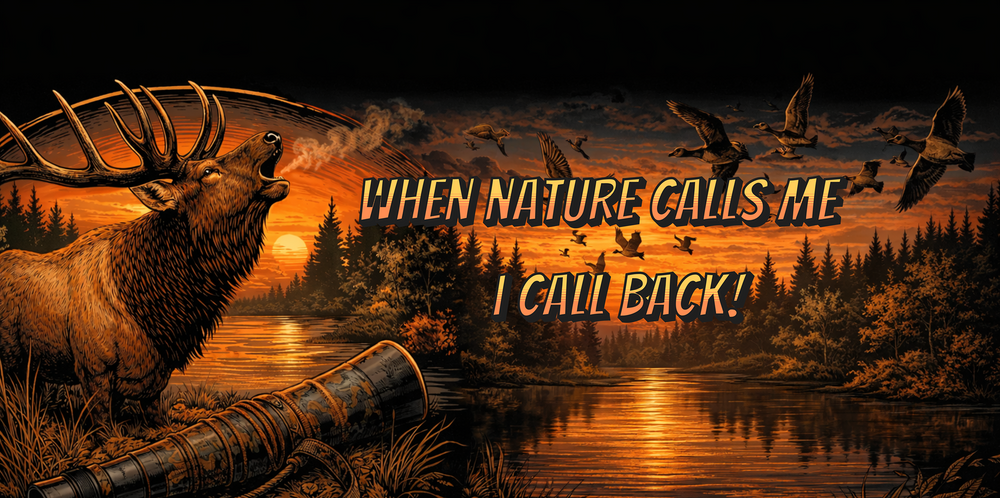

I moved to Colorado from California in 1990, My sophomore year of high school. I was VERY much an advocate for "saving all animals" and I thought that hunting was cruel. After meeting my husband of now 28 years, I realized how far from the truth that actually was. Without hunting we would have LESS wildlife and MORE disease amongst wild animals. I know...it seems counter intuitive, but my inexperience with hunting led me to believe these things. My husband has been an avid hunter pretty much all of his life, I was not raised in a "hunting" family and just didn't know any better. I was super surprised to find out what I did when I started research all of those years ago.
Hunting, when practiced responsibly and regulated by wildlife agencies, is a powerful force for conservation and environmental health. Here are some current, evidence-based facts from wildlife divisions and conservation organizations:
1. Wildlife Population Recovery
• In 1907, only 41,000 elk remained in North America. Thanks to hunters’ investments in habitat and conservation, elk populations have rebounded to over 1.1 million today (Rocky Mountain Elk Foundation).
• White-tailed deer populations climbed from just 500,000 in 1900 to over 30 million today, largely due to conservation efforts funded by hunting licenses and fees.
• Wild turkey numbers grew from 100,000 in 1900 to more than 6 million today, again thanks to hunter-supported restoration.
2. Conservation Funding
• Hunters pay over $896 million annually in state licenses and fees, supporting wildlife management and habitat preservation (RMEF).
• Since 1937, an 11% excise tax on guns, ammo, bows, and arrows has raised more than $17.7 billion for conservation, with nearly $1 billion raised in 2024 alone.
• Hunters and recreational shooters contribute $8.1 million every single day to conservation in the U.S.
3. Habitat Protection and Restoration
• In 2024 alone, the Rocky Mountain Elk Foundation completed 18 land projects in 12 states, conserving 25,594 acres of elk habitat and opening or improving public access to 21,816 acres.
• Active forest management funded by hunters enhanced 178,081 acres of habitat in 2024.
4. Science-Based Management
• State wildlife agencies use data from hunters and scientific monitoring to set quotas and seasons, ensuring sustainable populations of both game and non-game species.
• Hunting helps manage overpopulated species, reducing disease, starvation, and habitat damage, while also minimizing human-wildlife conflicts.
5. Economic and Community Benefits
• Hunters and recreational shooters create $45 billion in wages/income each year and support 970,000 jobs nationwide.
________________________________________
Regulated hunting, guided by science and managed by wildlife agencies, is essential for maintaining healthy wildlife populations, restoring habitats, and funding conservation for all species. Hunters are among America’s most dedicated conservationists, ensuring wild lands and wildlife remain for future generations.
Sources: - Rocky Mountain Elk Foundation: Hunting is Conservation - Wildlife Foundation of Florida: Hunting’s Role in Conservation


